
This week has me looking into copyright, trademark and intellectual property disputes. It doesn’t sound glamorous but It’s actually super interesting. I feel like I’ve got more of an insight into managing a successful studio and how to avoid these disputes. At the very least you need to be working towards avoiding them wherever possible. A lot of the time with these disputes it’s the audience backlash that’s way worse than the alleged infringement. The general public are mostly unaware of the actual laws and can come up with some wild comments.
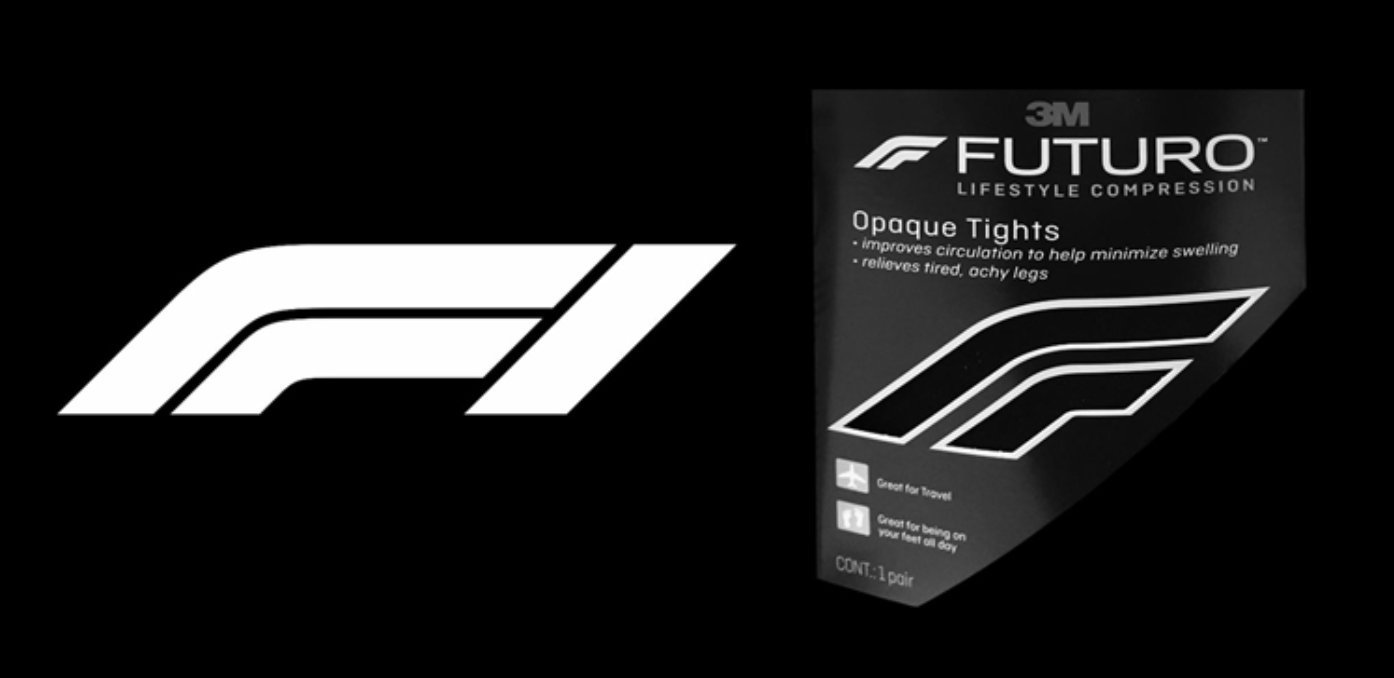
I remember the F1 logo debacle last year and I didn’t think much of it. You wouldn’t confuse car racing with tights so what’s the problem. Some of my favourite comments from the design week article:
“Definitely should be challenged. Way too similar. With all the money that Formula 1 have, I’m amazed they didn’t do a search before launching this one.”
— Debs
Should it be challenged? If you were looking for logos that were similar to yours to try and not have the same as anything else, how would you even find this logo? It’s super unrealistic to search through the entire internet looking for a logo that’s similar. One person comments: “With all the money I‘d sue Turley.”
“Any confusion? None whatsoever, take out the legal team and there wouldn’t be an issue, but if someone can make money from it, then look there’s confusion.”
— Gary
“If only context had a bearing upon any possible confusion and or litigation. Next time I’m browsing in the Chemist for a compression support product, I’m not mentally thinking about the world of F1, I’m trying to evaluate a product based upon it’s brand (3M) and price and alternative products. I’m not convinced that I’d end up being so confused that I wouldn’t make a purchase. Maybe that’s why I’m not practicing law!”
— Knowledgable Nige
The range of comments for and against really illustrate the point that a lot of the time in these high profile cases, the audience don’t understand the law and see it as a clear cut case.
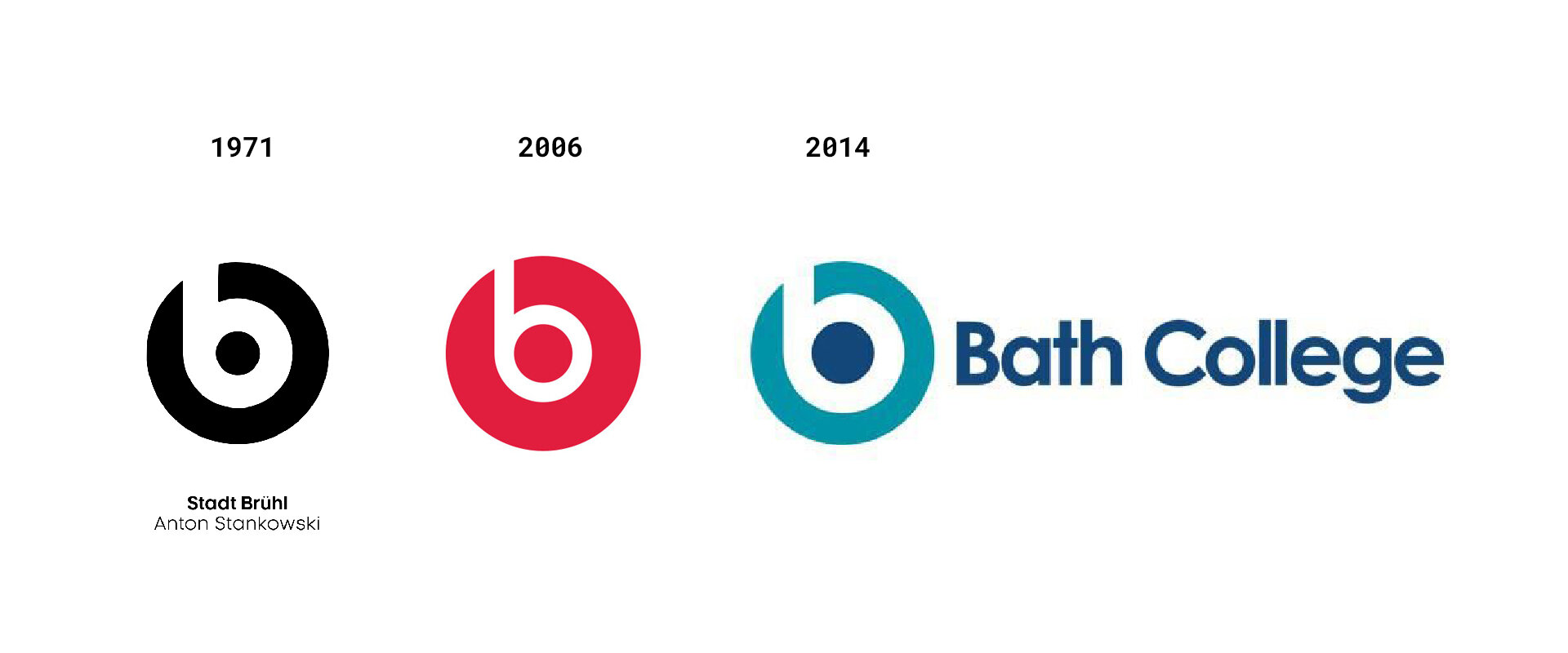
We all know what the beats logo looks like. A circle with a ‘b’ in it, pretty generic. You may not know what the Bath College logo looks like however. Except you actually do because it’s the same kind of thing. Ultimately though, they are both ‘inspired’ by the 1971 Stadt Brühl logo designed by prolific German designer, Anton Stankowski. What happened here? Pentagram were responsible for the branding of ‘Beats by Dre’ in 2006. They were very clearly inspired by Anton’s original logo, perhaps they even have a copy of ‘Trademarks & Symbols of the World: The Alphabet in Design’ by Yasaburo Kuwayama. This book has examples of logos that use standard characters in their design. Beat’s aren’t the only high profile company getting the ‘copy from a 1980’s’ book treatment. Airbnb’s logo is also a rip off of another from that same book. The book is actually viewable online, can you find any logo’s you recognise? Link below:
Workshop Challenge
Select a designed object and highlight the key areas that may infringe copyright or require IP protection.
After thinking too hard on what ‘designed object’ I want to talk about, I decided to forego the obvious. We see fake knock off products online nearly everyday and at this point, counterfeit goods have become a normality. I’m going back to a simpler time, no Air Pods, no Intellectual Property. When the most innovative thing you had for your family was a carefully baked loaf of bread. The Bagel.

Originating from the Jewish communities in Poland, apparently in 1610, and now thrust around coffee shops and bakeries in New York. As a UK citizen, I have absolutely no clue as to the origin of the bagel. I assumed it was an American thing. I now know that the Jewish Polish immigrants brought the delicacy to New York, the Americans loved it and somehow it’s now kind of ‘their thing’. Lets apply some IP and copyright law to the world of 17th century baked goods. How could the Polish protect the great bagel? I will henceforth refer to the Polish Jewish Immigrants as the ‘Bagelers’ (ones bestowing the bagels) and the Americans as the ‘Bagelies’ (ones receiving said bagels).
Write up a contract.
The first thing that should have been established with the delegates of the Bagelies Baking Association is a clear foundation of ownership. The rights to bake with the intent of accumulating wealth, any savoury, holed bread is owned by the Bagelers. The rights to the original recipe and any similar variation there of is owned by the Bagelers.
The Bagelers should make it tremendously clear who owns what.
Patent.
A patent is essential for ensuring the safety of the Bagel. The Bagelers will ensure, through use of a patent, that they have the sole right to produce, use and sell ‘the sandwich with a hole in it’.
Trademark.
Trademarking the Bagel will ensure that the bagel will be recognised as the exclusive baked product of the Bagelers. This ensures that the origins are clear and the identity of the bagel is protected.
Copyright.
Copyrighting the bagel ensures that only the Bagelers have the right to make copies or edits on all elements of the product. No, the Bagelies can’t just steal the recipe and add poppy seeds.
 mbetts.design.blog