
This week I’m looking into the reasons why The US copy of TIME Magazine gets different covers and stories in their publications compared to the rest of the world.
Whether it’s an issue of building national pride, positioning themselves as ‘the only players at the table’, or government censorship. It makes it look like the rest of the world have some stake in international affairs and enjoy reading about other cultures but the US doesn’t want to know. I’m excited to dig deeper and explore a workshop challenge outcome for this.
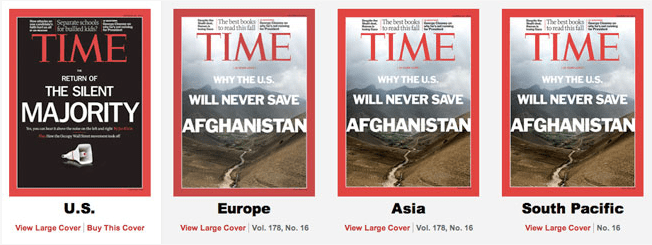
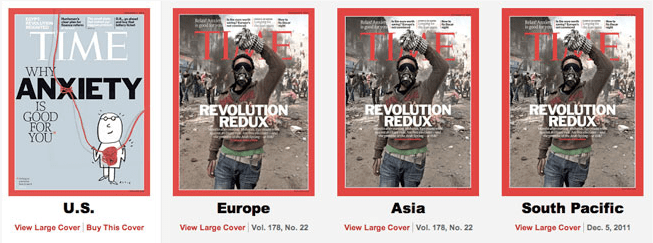

Here is an initial list of differences that I’ve come up with to help me find a possible reason.
U.S COVERS
Negatives – THEY:
Listen to the government who could have a hand in what they want Americans to read.
Think they’re superior.
Are in their own bubble.
Have no interest in International affairs.
Don’t want other countries to look superior.
Are not interested in the politics of other countries.
Are possibly less respectful of other nations.
Don’t welcome sensitive subjects.
Positives – THEY:
Would prefer to build stronger patriotism through largely American stories.
Promote national pride – Keep it ‘Local’.
Post about their own positivity.
Would prefer to focus on their own problems.
Could be going through a difficult time and keep it light hearted.
Are so far from the ‘Rest of the world’ that it’s not relevant.
Want to keep americas problems to themselves.
REST OF THE WORLD COVERS
Negatives – THEY:
Aren’t as catered to, each region should have their own cover?
Aren’t given as much thought as America’s ‘local’ approach.
Don’t showcase the ‘American Dream lifestyle’, (surprising they don’t flaunt).
Get a generalised view. Asia gets the same cover as the UK yet they are culturally different.
Positives – THEY:
Get an insight into international affairs.
Get to see what’s going on around the world.
TIME Magazine. Why are the covers different?
When I first came across the fact that the U.S. often gets different TIME Magazine covers to the rest of the world I was appalled. The possible reasons that first came to me were largely negative. Does America think they’re better than anyone else? Why wouldn’t they want the Queen on the cover? Do they have less respect for the Queen than other countries? There are so many speculative negative questions but no answers.
I’ve been thinking under the assumption that the international covers were designed and then either changed or replaced to reflect the needs and readership of the U.S. Isn’t the opposite actually true? TIME Magazine is a U.S. brand. The American cover is designed first, promoting patriotism through local stories, focusing on local positivity and catering to the readers. Then the international cover is designed, the local U.S. cover isn’t going to resonate with the rest of the world. We aren’t as interested in American football or Mitt Romney. I do find it surprising however that the U.S. dream isn’t flaunted to the rest of the world.
On the international covers, there is usually a diverse representation of cultures. Sometimes there’s European politics, other’s there are Terrorist leaders or positive images of China. The problem with this is that we never know what we’re going to get. In the UK market, are we more likely to resonate with a cover related to the Euro or the end of Al-Qaeda? The UK gets the same cover as the Middle East and Africa. A heavy-handed approach which begs the question, Are we as an international audience, an afterthought? If TIME Magazine caters to the American consumer, why don’t they cater to the Indian or British consumers in the same way?
I initially felt bad for the U.S., the citizens don’t get the same exposure as we do into the international affairs of the other countries. Now, however, I’m concerned that the ‘rest of the world’ don’t get the local stories they deserve.
Although TIME magazine generalises their covers for the international audience, I think they do a good job targeting the masses. The insides of the magazine have the same copy all over the world, so when you think about it, U.S. readers are still getting the international insights that they deserve, they are just baited in by a local cover that they’re more likely to pick up. In that way, the U.S. copies are superior. The international covers would obviously resonate more with local markets if the cover was personal but that’s not what TIME want. They’re designed with figureheads and big stories in mind to get the widest readership possible.
Ultimately I’ve concluded that It’s me that’s the problem. My personal biases affected my initial reaction. The fact that I’m a citizen of the ‘rest of the world’ and not of the U.S. puts me on the negative side by default. I naively assumed that the cover was made for the international market first, thus making it look like it wasn’t good enough for an American readership. It’s almost the opposite that’s true, I’m not American enough to get the original cover so I have to make do with the international shotgun approach.
The PDF
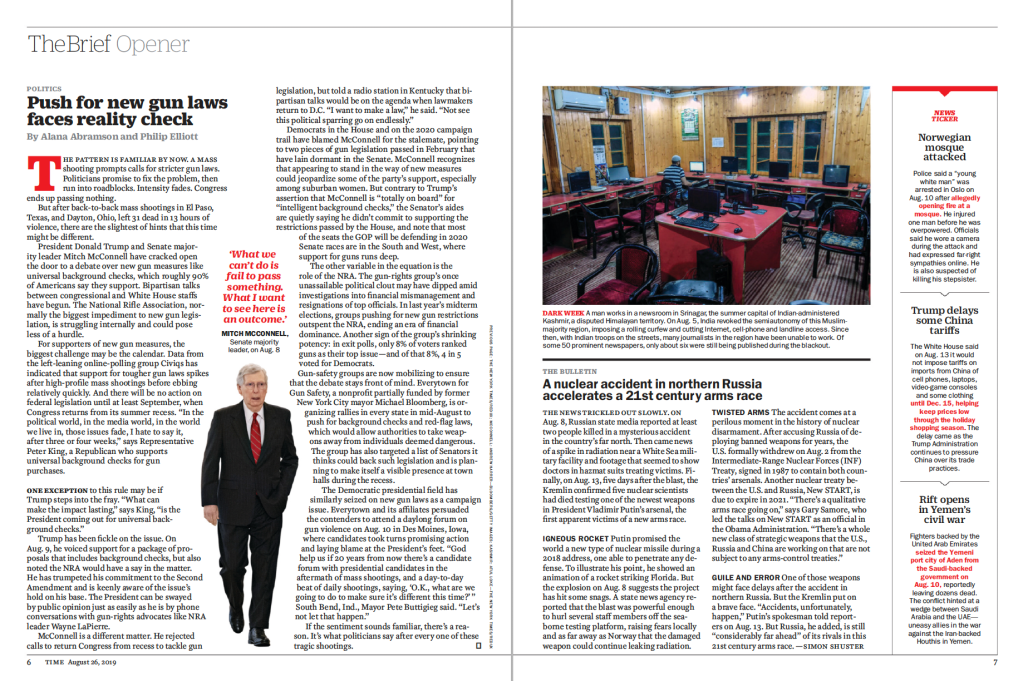
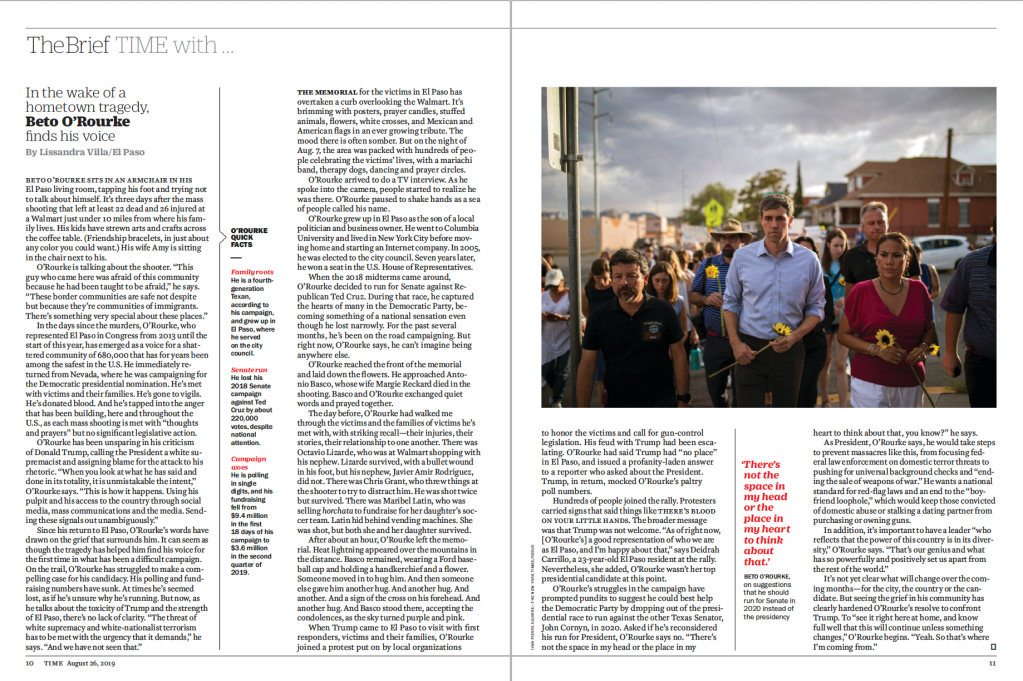
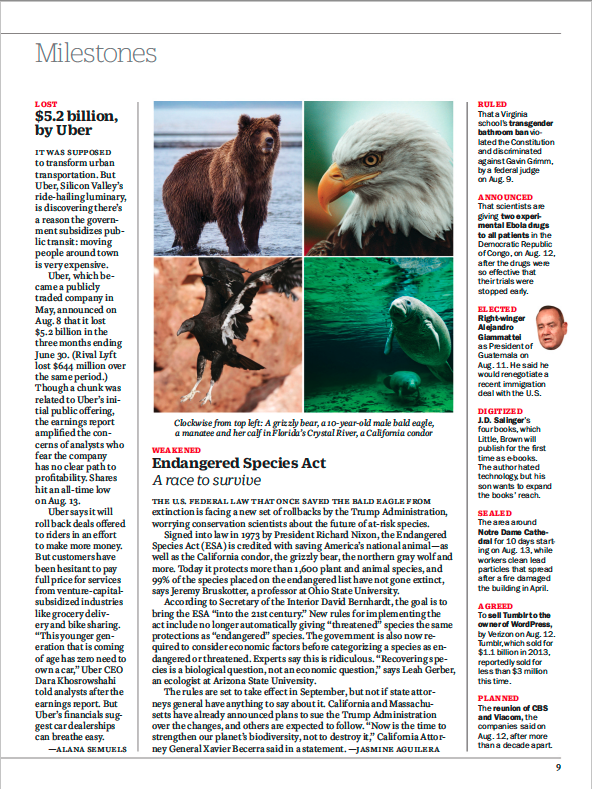
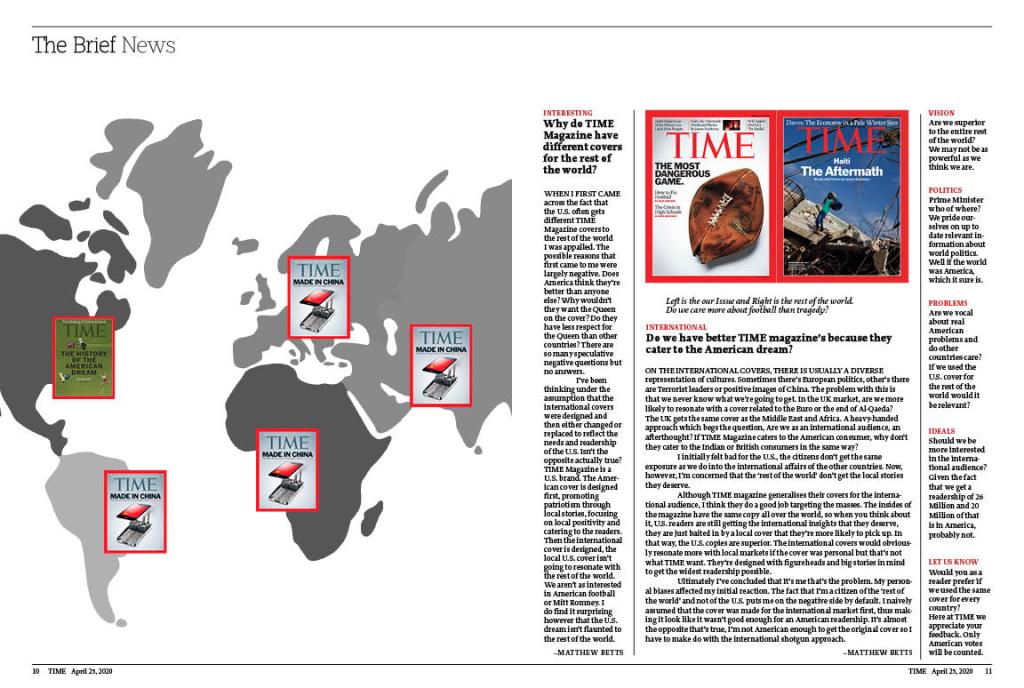
I looked at some spreads from a recent publication of TIME and copied the grid system, fonts and colour palette. Here is my finished spread.
 mbetts.design.blog